
A Florida Homeowner & Business Owner’s Guide
Florida is known as the lightning capital of the United States, with more lightning strikes per square mile than any other state. From summer thunderstorms to hurricane season, properties across Florida face a higher risk of lightning damage year-round. One of the most common questions property owners ask is:
How many lightning rods do I need on my roof?
The answer depends on several factors, including your building’s size, roof design, and location. Below, we break it down in a clear, Florida-specific way to help you understand what proper lightning protection really requires.

Why Lightning Protection Is Especially Important in Florida
Florida experiences:
- High thunderstorm frequency
- Coastal weather patterns
- Flat terrain that increases strike probability
- Long storm seasons (spring through fall)
Because of these conditions, a single lightning rod is never enough to properly protect a structure. Effective lightning protection is a system, not a single device.
The Short Answer: There Is No “One-Size-Fits-All” Number
The number of lightning rods needed on a roof depends on:
- Roof size and perimeter length
- Roof shape and height
- Building use (residential, commercial, industrial)
- Nearby trees or structures
- Local lightning exposure (very high in Florida)
Professional lightning protection systems are designed using NFPA 780 and UL standards, which define how lightning rods (air terminals) must be spaced and installed.
General Lightning Rod Spacing Guidelines
While every building requires a custom design, standard guidelines include:
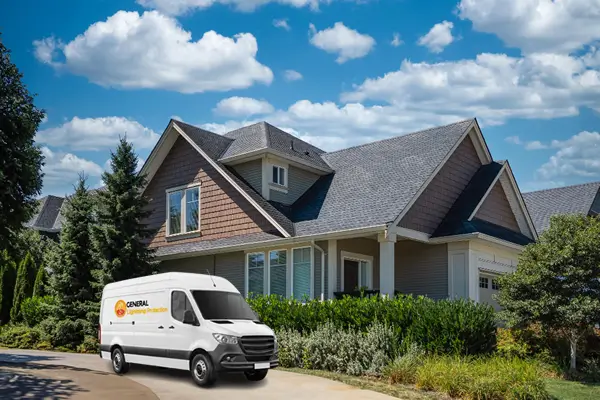
- Lightning rods are typically spaced every 20 feet along roof edges and ridges
- Additional rods are required on:
- Roof peaks
- Corners
- Dormers
- Chimneys
- Rooftop equipment
- Tall or complex roofs need extra air terminals for full coverage
Example:
- A small Florida home may require 10–20 lightning rods
- A large commercial building may need dozens or more
This is why professional evaluation is essential.
Roof Shape Plays a Major Role
Flat Roofs (Common in Florida Commercial Buildings)
- Require rods around the entire perimeter
- Extra protection for HVAC units and rooftop equipment
Gabled or Pitched Roofs
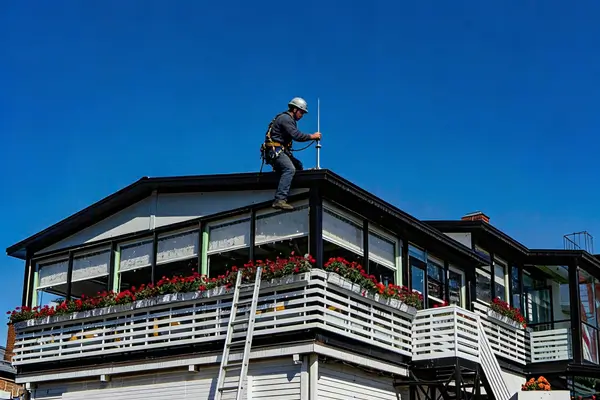
- Rods placed along ridgelines and edges
- Additional rods at roof ends and peaks
Tile Roofs (Very Common in Florida Homes)
- Require specialized installation to avoid damage
- Proper spacing is critical to prevent side flashes
Height and Exposure Matter
The taller and more exposed your structure is, the more lightning rods it will need.
Florida properties at higher elevations, near:
- Waterways
- Beaches
- Open land
- Golf courses
are more likely to be struck and require enhanced protection.
Lightning Rods Are Only One Part of the System
A common misconception is that lightning rods alone stop lightning damage. In reality, they work as part of a complete system that includes:
- Air terminals (lightning rods)
- Conductors (cables)
- Grounding electrodes
- Bonding to electrical and metal systems
Without proper grounding, even a well-placed lightning rod system will fail.
Why Professional Design Is Critical in Florida
Florida’s soil composition, moisture levels, and storm intensity require region-specific grounding methods. Improper spacing or DIY installations can actually increase risk.
A licensed lightning protection contractor:
- Evaluates roof layout
- Calculates correct rod spacing
- Designs grounding for Florida soil
- Ensures code compliance
- Protects insurance eligibility
How General Lightning Protection Can Help
At General Lightning Protection, systems are designed specifically for Florida homes and commercial properties, accounting for local weather patterns and lightning density.
A professional inspection can determine:
- Exactly how many lightning rods your roof needs
- Where each rod should be placed
- Whether your existing system meets current standards
Frequently Asked Question: Can I Add Just One or Two Rods?
In most cases, no. Adding rods without redesigning the system can create uneven protection and dangerous side flashes. Lightning protection must be installed as a complete, balanced system.
Final Thoughts
So, how many lightning rods do you need on your roof?
As many as required to fully protect your structure — no more, no less.
In Florida, that number is often higher than people expect due to extreme lightning activity.
If your property is located anywhere in Florida, professional evaluation is not optional — it’s essential.
Protect Your Property Before the Next Storm
If you’re unsure whether your roof has enough lightning rods or if your system meets current standards, schedule a professional evaluation with General Lightning Protection.
Proper lightning protection today can prevent catastrophic damage tomorrow.